Search This Blog

Saturday, August 28, 2010

"Antonina Nezhdanova [Антонина Васильевна Нежданова] People's Artist of the Soviet Union


"Antonina Nezhdanova(1873-1950),was born near Odessa,to parents who were school teachers. Both were themselves amateur singers, and her father had formed a local choir in which young Antonina sang, even as a small child. She was a good and diligent student, and after studying at Odessa, attended and graduated from Umberto Masetti's famous class at the Moscow conservatory in 1902. (She was to continue studying with Masetti until his death in 1919.) She was immediately engaged at the Bolshoi, where she remained for nearly 40 years, singing leading roles in Russian and West European operas, most frequently opposite the great tenor Leonid Sobinov. In 1912 she was Gilda at the Monte Carlo Opéra, with Tita Ruffo as Rigoletto and Enrico Caruso as the Duke. Some outstanding roles of her huge repertoire were: Ludmilla in Glinka's Ruslan and Ludmilla, Tatyana, Lakmé, the Snow Maiden, Volkhova, Elsa, and Rosina.

She embraced the Communist era with enthusiasm, having been taught by her parents that it was the duty of middle and upper class Russians to help the less fortunate, and support their legitimate claims to a decent life. So strong was this belief in her that she would often sing in provincial theaters for food, or even for nothing at all. This earned her the great and ever-lasting affection of the Russian people. Beginning in 1922, she became a cultural ambassador for the Soviet government, and appeared in Berlin, Prague, Warsaw, Baltic capitals, and cities in Germany and Poland. In the USSR she was among the most honored singers and teachers. The government bestowed upon her the prestigious titles "People's Artist of the Soviet Union," for her great artistry, and "Hero of Labor" for her life-long efforts on behalf of socialist reform. From 1936 on, she taught at the Stanislavsky Opera Studio, later at the Bolshoi Opera Studio, and finally at the Moscow Conservatory, from 1943 until 1950." *

Nezhdanova is particularly noteworthy for the absolute perfection of her singing technique. It could be called Russian, or it could be called bel canto; I suppose it could be both: there is a premium on ease of attack and fexibility. The “color” of Russian voices, especially high voices, is “whiter” than the dark and ponderous Italian voices that have come to dominate most opera singing today. Some of this owes to the language, and some owes to the bel canto school of singing. As a general rule, as we have discussed in some detail before, bel canto singing tends to produce whiter, open phonation that reveals the more characteristic tones of the speaking voice of the singer. Chaliapin is a particularly striking example of this kind of singing, so much so that some refer to him as a singing actor because of the extremely clear enunciation that is part of bel canto training. Nezhdanova, however, does not go to that extreme. Her singing style was pure bel canto, with an emphasis on lyricism and beauty, reflecting her lifelong study with Masetti. Here is a superb example of the great soprano singing a classic Italian aria, "Una Voce Poco Fa." I call your attention to the extraordinary flexibility of the voice, and the immaculate, almost understated style, which is actually more respectful of the tradition of great singing—and Rossini’s intentions—than the often self-indulgent bombast that can accompany this particular showpiece aria. Her coloratura is perfection itself:

http://www.youtube.com/watch?v=aM7Y5mYFQPU

An absolutely astonishing piece of vocalism! It is hard to imagine it done better; both the musicianship and style are admirable.

Also of great musical interest is a recording that Nezhdanova made of Elsa’s aria from Lohengrin, and it demonstrates very well that it did not,nearer Wagner’s time, require a monster soprano voice to sing Wagner, who was in fact very impressed with some Italian composers, especially Rossini and Bellini. He is reported to have spoken very highly of Rossini after a personal meeting with him that completely dispelled for Wagner some of the silly stereotypes of Italian music and composers that were current at the time. He is also said to have expressed a wish that his tenors be trained in Italy. It is also worth noting that the pit at Bayreuth is covered, both to avoid any sight-line interruptions between stage and viewer, and also to help keep the volume of the sound down:

http://www.youtube.com/user/EdmundStAustell#p/u/172/vXDk1PE3bIw

I strongly feel that this is exactly what would have pleased Wagner. It is clear, musically and stylistically excellent, and simply beautiful. The lyricism and plaintive nature of the piece come through in the voice in a way that is often not captured by huge and heroic voices.

Finally, another soprano showpiece, "Sempre Libera", from La Traviata, featuring a high D natural at the end. Extremely high notes were not so common in Nezhdanova's day, especially if the voice carried much weight into the extreme top register:

http://www.youtube.com/watch?v=Vq1S34TBYEo

A wonderful soprano indeed, and a great personality! She deserves her accolades and reputation, and it is both just and gratifying that she is finally becoming known to opera lovers in the United States.
__________________________________________________________
*I wish to express my gratitude both to Natalia at younglemeshevist, a good friend and connoisseur of fine arts with a prodigious knowledge of great Russian art and singing, and to Tim at dantitustimshu, a superb collector and scholar, for information which has informed my biographical sketch of Nezhdanova, and to Tim for the photos of Nezhdanova.

Sunday, August 15, 2010

Giuseppe Di Stefano: A Tenor For All Seasons


Giuseppe di Stefano was born in Motta Sant'Anastasia, a village near Catania, Sicily,in 1921. He came from a family of very modest means and was educated at a Jesuit seminary. His operatic debut was in 1946 in Reggio Emilia as Des Grieux in Massenet's Manon. His La Scala debut was the next year, in 1947, in the same role. From his early youth, Di Stefano's voice was remarkable for its great beauty. After the La Scala debut, his rise was unusually rapid. His Met debut followed, in 1948, in Rigoletto. He was to be a Met mainstay for many years. From this moment on, he sprang to international fame, and sang in all the major opera houses and in many festivals. His biography is very easily consulted, owing to his great popularity.

I will say at the outset that I am, and have always been, an ardent Di Stefano fan. I can't promise too much objectivity on this one. We are accustomed to speaking of tenors in many categories: leggiero, lyric, spinto, dramatic, and heroic. Di Stefano, however, was molded in the old-fashioned way. He was essentially a tenor—period—and he sang an extremely wide range of roles, each requiring different vocal abilities, or "kinds" of voices, at least according to current mythologies. This did not concern Di Stefano. His essential training was bel canto, and he adhered absolutely to the advice of Fernando De Lucia: "Per cantare bene, bisogna aprire la bocca!" (This was reported by his most famous student, Georges Thill, in a filmed interview that can be seen on Youtube.) Di Stefano did "aprire la bocca," very wide indeed, and very consistently, and that is how he sang. His pronunciation, as a result, is impeccable. You can understand every single word, in Standard Italian, Neapolitan, or Sicilian. It was very open phonation, and while some criticized him for this, I think it served him beautifully, because it gave him an enormous range, superb control in the extreme upper register (he could diminuendo on a high C natural!) and it made it possible for him to sing roles from Nemorino to Calaf. Here is the very young Di Stefano, little more than a boy, is the popular "Una furtiva lagrima.":

http://www.youtube.com/watch?v=Z8EqJjDM-nA

A beautiful rendition for a 23 year old! Already the main qualities are in place—the open phonation, the beautiful voice, the superb enunciation, and a remarkable ability to diminuendo down to a lovely mezza-voce that is almost choir-boy-like. It was clear he was headed for the big time!

Let's progress by repertoire and age, and the "tenor for all seasons" ability will become apparent. Here he is in a very demanding role, the Duke of Mantua, which is a serious step up from Nemorino in terms of vocal demands, singing the extremely well known "La Donna è Mobile." Notice the open phonation, and the easy access right up the scale to the final B natural:

http://www.youtube.com/watch?v=qhVgUFiCJnQ&feature=related

Wonderful! Did you notice that in addition to the immaculate pronunciation, that there is a distinctive, recognizable personality to his voice? It often happens that when opera singers in a given vocal fach cover their sounds heavily, it is almost impossible to tell one from another. When the phonation is open, however, the individual personality of the speaking voice is revealed. Among basses, the most striking example is Chaliapin, who was a wide-open singer if ever there was one, as tenor Giovanni Martinelli was also.

Like Giacomo Lauri Volpi, Di Stefano (whose vocal production was similar) could sing very high. Here is an extraordinary piece of singing featuring Di Stefano and Callas, his frequent collaborator (theirs was a bit of a mutual admiration society). This short finale to a longer duet features a high Db from both of them, and a B natural at the end. This, as I indicated in the description accompanying the video, is virtuoso singing of a very high order indeed:

http://www.youtube.com/user/EdmundStAustell#p/u/3/q6PPPLXvAnM

That is simply spectacular! There is no other word for it. That is the kind of singing that makes people happy to lay down their hard earned money for expensive opera tickets, and then stand up and shout to demonstrate their satisfaction at having heard great singing.

Finally, in our progression, a very heavy role, Calaf in Turandot, in the by-now famous "Nessun Dorma:

http://www.youtube.com/watch?v=yvyWpLZalE8&feature=related

Magnificent. Same vocal production as for Nemorino. Nothing has changed. This is the repertoire critics say he should not have sung, yet I challenge anyone to fault this rendition of "Nessun Dorma" in any way. Perhaps it did shorten his career a bit, but that turns out—considering how long his career was—to be a matter of small concern. He had a spectacular career, was greatly respected, sang all over the world in all the important opera houses and made a very large number of recordings and no small amount of money. There's a problem here? I don't think so. Also, he was certainly not the only tenor to sing with an open phonation on top. One thinks of Giacomo Lauri Volpi, Fernando de Lucia, and Georges Thill, for starters, three of the most famous tenors of all time. No, this is great tenor singing, plain and simple.

Sadly, he died a tragic but heroic death. Attacked by unknown assailants in his summer home in Kenya, he fought bravely—at age 84!—to defend his wife from the thieves. He saved her, but he paid for his heroic actions by being so badly beaten that he slipped into a coma and basically lay, in pain and semi-consciousness, for the last three years of his life, dying at 87 in Milan. This was as great a man as he was an artist!

Wednesday, August 11, 2010

Franco Bonisolli: Opera's Wild Man


I should start by saying that I respect the voice, the talent, and the raw energy that was Franco Bonisolli. He was a great tenor, whose eccentric behavior ultimately undercut his career and his reputation. There are elements of tragedy here, because the talent was very great, and it is that man that I wish to celebrate, not the one cruelly called "il pazzo," a nickname that unfortunately stuck.

Franco Bonisolli was born in Rovereto in 1937, and began his career at the Spoleto Festival in 1961, in Puccini's La Rondine. He sang in unusual and seldom performed operas for several years, but by so doing began his inevitable climb through the web of Italian houses until, 8 years later, in 1969, he was ready for a La Scala debut, performing in Rigoletto, L'Elisir d'Amore, and La Bohème. After La Scala, the rise was rapid. He was a handsome young man, with a spectacular voice, brilliant at the top, all the way to a high D natural. He had everything he needed for a wonderful career. He went on to sing in San Francisco, New York, Vienna, and the career quickly went world-wide.

He developed early-on the maturity required to sing the big roles, and parts such as Andrea Chenier, Calaf, and—especially—Manrico became audience favorites. Here he is in the famous "Nessun Dorma," from Turandot, a live performance from 1987, in Covent Garden:

http://www.youtube.com/watch?v=xGOf2d5yieo&feature=related

This is beautiful and powerful singing, and the strength of the upper register is in ample evidence. This is the kind of singing and performing that won Bonisolli his international reputation. The quality of the voice is ringing and virile and absolutely consistent up and down the scale. He is an attractive man and looks very good on stage. At the beginning, he sometimes tended to under-act, rather in the tradition of the older "stand there and sing" stars, such as Zinka Milanov, who once famously asked "what good is acting if you can't sing?"

Here is another clip from 1984, a live performance on TV. This is possibly the best Bonisolli video on Youtube, and shows the tenor in full command of his great abilities, confident and in spectacular voice:

http://www.youtube.com/watch?v=DDUHPKfFdGA&feature=related

This is impossible to fault in any way! I have seldom heard this famous aria sung better. And the high notes! The high C is spectacular. Notes that high just don't get any better than this. It was this spectacular higher register that was responsible for much of Bonisolli's reputation. This is no squeezed-out high C, there is plenty of heft in that sound, and it rings like a bell. One thinks of the great Franco Corelli, one of the few spinto tenors with whom Bonisolli can be compared. He voice extended even higher. Here is a short cabaletta from Rigoletto, recorded in 1969 (early in the international career) with a high D natural at the end. The lip-synch is not very good, but he is in good voice at least, and you can see that he was a very handsome man at that time.

http://www.youtube.com/watch?v=0pRAY07k_GE&feature=related

This is rarified singing; there is not a great deal of competition at this level.

And now, I feel that I must post the following video, if I am going to make an honest evaluation. It shows the sad degeneration toward the latter part of the career. Bonisolli's behavior had become so erratic that he was unreliable in performance and very hard to work with. This video, made at an annual Gigli memorial festival, shows him singing his signature piece, "Di Quella Pira," with a very large orchestra in front of a huge audience. He sings the piece, and basically refuses to leave the stage, infuriating the conductor. The audience gets into the game (opera can still be blood sport in Italy!) until the conductor has no choice but to play it over again. After the second rendition, watch the end of the video carefully, and you will see Bonisolli hopping, skipping and leaping off stage. A sorry spectacle, to be sure. But, to be honest, this was the problem. Great talent and intolerable antics. I suppose some think it funny. I can't, because we are witnessing a great talent deconstructing itself in front of our eyes. Sorry....maybe I should laugh, but I can't:

http://www.youtube.com/watch?v=Xzg86rNphrI

And there you have it. I have heard, but cannot prove, that toward the end of his life (he only lived to be 66) there were very serious health problems that were possibly neurological in nature. It may well be that that was the problem. If so, then his having had a major career was more of a triumph over illness than a failure of personality. That is certainly what I would like to think.

Sunday, August 1, 2010

Salomea Krusceniski [Соломія Крушельницька]


Salomea Krusceniski was born in what was then Lvov, Poland, (today it is Ukraine) in 1872. . She studied at the Lviv Conservatory and made her debut in 1892, as Leonora in Donizetti's La Favorita, at the opera house of Lemberg. Further engagements followed quickly in Odessa, Warsaw, and St Petersburg. In 1898 she sang in Italy for the first time, as Leonora in La Forza del Destino. She enjoyed great success and was invited to sing in Rome, Naples, and at La Scala in Milan. In 1903 she settled in Milan because of political disturbances involving Poland and Ukraine. At La Scala, her Aida was a triumph, and a triumph in Madama Butterfly followed quickly. Her career soon took her abroad; to Spain, Portugal, and South America. Her repertoire eventually came to include 60 roles. She went on to have a very successful concert career, and from 1944 until 1952 she taught singing at the Lviv Conservatory. She died in 1952.* There are good biographies on the web, easily consulted.

Krusceniski's name is known to many opera lovers, especially in Italy and Eastern Europe, but she remains, for many Americans, a discovery yet to be made. I know that my acquaintance with her, via a recording of "Ritorna Vincitor," was a revelation, to say the least. More of a shock. I have seldom heard a more effective encapsulation of dramatic emotion in a piece of music. I can think of no better introduction. This is a 1907 recording, and you will need to adjust the volume for best listening. Be patient with the loading of the recording. It take over 20 seconds for it to engage:

http://www.youtube.com/watch?v=TxI7YgexvpU


I find that absolutely thrilling! It is not easy to explain. We enter here into the mystery of style, conviction, emotion, and musical art, in exactly the same way we do with Maria Callas. The style is perfect, and the musicality exemplary; she always sings, she never shouts. Her approach is always lyrical and musical, but the effect is more striking by far than if someone declaimed without consideration for the music. In that regard she is, like Callas, a great tragedian. That so much emotion can survive, intact, for 103 years, after having been recorded on laughably primitive equipment, is proof positive of her perfection of technique, musicality and style. I still struggle today to describe the effect this ancient recording had on me the first time I heard it.

A good way to judge the quality of Krusceniski's voice comes, curiously, from an even older recording. This recording of "Solveig's Song," from Grieg's Peer Gynt, was, amazingly, made in 1902! Yet, because of the piano accompaniment, and, apparently, the horn placement, her voice comes through as clearly as if it had been recorded electrically. This recording contains two versions of the song. Just listen to the first, the 1902 version, as it makes the point convincingly. Again, be patient with the loading of the video...it takes 30 seconds to engage:

http://www.youtube.com/watch?v=3WSTkKXSxyM&feature=email


Amazing recording, isn't it? The quality of the voice, in 1902, when she was 30 years of age, is truly superb—a solid column of sound, from top to bottom, well modulated and flawlessly produced.

Finally, a very popular aria—"Un bel di, from Madama Butterfly. Krusceniski was one of the first interpreters of this role, and she was much admired by Puccini for her portrayal. Notice the extremely smooth musicality of her presentation, the intense emotion (of the non-screaming kind!) and a shorter high Bb at the end than current tradition would have it. Like famous high notes of all kinds—"Celeste Aida," "Di Quella Pira," "Salut, demure...," "Che Gelida Manina," and any coloratura soprano aria ending on or above C natural—one singer's triumph quickly becomes another singer's challenge. Before the days of "tradition," however, we tend to hear music as it was written and, often, as coached by the conductor himself. Puccini actually went to these performances, after all, and it is bound to be the case that he spoke to the singers about their roles. "Un bel di" is written in 3/4 time, and the final Bb is written for only one measure. Now audiences feel cheated if it does not extend for another 8 measures into the 2/4 time of the next scene!

http://www.youtube.com/watch?v=2aSl4IijV08&feature=related


A musically immaculate and thrilling piece of singing! Some things have been gained since 1912, but much has been lost.

*If you find yourself fascinated by this extraordinary singer—as I was—please permit me to refer you to the Youtube Channel of Tim at"dantitustimshu" (Better write it down, it's not easy to remember). Tim—a brilliant musical scholar and record collector—has the best collection of Krusceniski records to be found, and has thoughtfully collected them into a playlist, where they may be consulted. I am further indebted to him for the historical and biographical notes that appear at the beginning of the article. Also, for general reference, I refer the reader to: "subito - cantabile: A site for collectors of Great Singers of the Past" (http://www.cantabile-subito.de)

Sunday, July 25, 2010

Alfredo Kraus: The Personification of Elegance


Alfredo Kraus was born in 1927 in Spain's Canary Islands, and began his musical studies as a child, beginning piano at 4 years of age. He was a good and highly intelligent student of music, and developed disciplined habits at a young age which stayed with him throughout his life. He would, during his long career, be consistently praised for his extremely refined musicianship. A handsome man, in the debonair 1930's matinee-idol mold, he had an aristocratic bearing that bespoke the refinements of earlier centuries. All these qualities made it possible for him to have a superb career, and he did.

Kraus' debut was in 1956, at 29 years of age, in Cairo, portraying the Duke in Rigoletto, which was to become one of his signature roles, along with Werther, Nemorino, Arturo, and Faust. (His French was good, and he was very popular in the French repertoire.] In 1958 he debuted in Lisbon, and then, in quick succession, London, Milan, Chicago and New York, and then to world wide fame. There were no scandals in his life, no self-indulgent behavior, and no health crises. He was a model of stability, professionalism and artistic consistency, an extraordinary model for serious artists.

Kraus' voice was highly pitched. The territory around high C and even beyond, held no fears for him. Here he is (at age 59!) singing "Mes Amis," from La Fille du Regiment, a notorious aria whic contains—if you listen to it from the beginning—one B natural, two Bb's and an unbelievable five high C#'s! This aria is long. I recommend you move the radio button forward to 5:10 as soon as you can, and listen from there to the end, which is where the high C# fireworks take place.

http://www.youtube.com/watch?v=UrD6JJuUJ0E&feature=related

Isn't that something! And at 59 years of age, almost unbelievable. He never lost that brilliant top. And the wildly enthusiastic reaction of the audience is a clear indication of the esteem in which he was held. The clarity, consistency and seeming ease of production of those extremely high notes are sure signs of a brilliant singer, very disciplined and in complete control of his voice.

The Duke in Rigoletto was a natural for a distinguished looking man with a high-pitched voice. It was his debut opera and remained a favorite with audiences:

http://www.youtube.com/watch?v=VJJHZ2_onlw

Absolutely perfect bel canto technique, smooth as silk. This vocal production cannot be faulted in any way. It is very traditional, and perfectly adapted to singing tenor in opera. Curiously, given the eternal insistence from most voice teachers about low larynx and extreme diaphragmatic support, watching Kraus makes it clear that his larynx is often high, and much of his breathing is clavicular. It requires a very straight posture, which Kraus had. This may seem like heresy, in the era of belting, but in fact it is for some voices and styles of singing a time honored technique which Gigli also employed. Essentially, it is the way boy sopranos or coloratura sopranos sing. This is not to say he does not support, only that it is selective and integrated into a narrower, higher sound, less dependent on deep resonances.

Finally, the role which most consider Kraus to have owned: Werther. Here is one of the earlier arias in the opera, "O nature, pleine de grâce!"

http://www.youtube.com/watch?v=CQoH723vYpg&feature=related

It is very, very nice to reflect upon the fact that bel canto singing, with its elegance, beauty, and stylistic refinements, did not in fact die. It lived in Kraus,and lives in others and—given the very large number of aficionados who considered his art to be perfection itself—it is not going to leave us. It will come back, because the thirst is there.

Sunday, July 4, 2010

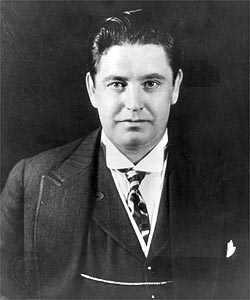
John McCormack: The One and Only


I think it is fairly safe to say that John McCormack is the one great tenor who had a brilliant career singing almost exclusively in the English language. That simply does not happen. There have been excellent tenors who sang occasionally in English (Alfred Piccaver, Richard Crooks) and some whose English language work was extensive and in the great opera tenor mode (Mario Lanza), but McCormack is a special case. I can visualize the hands going up, saying "Wait a minute....McCormack sang huge numbers of sentimental Irish ballads, and operetta songs....that doesn't count!" And that is where I disagree. It does count, because McCormack never let down his vocal and stylistic seriousness for any song or arietta. He always approached anything he did with all the classical vocal training and artistic seriousness at his disposal—and that was a very considerable amount!

McCormack was born in Athlone, Ireland, the fourth of eleven children, in 1884. He received his early education from the Marist Brothers in Athlone. Certainly one of the formative events of his youth was winning the gold medal in the 1903 singing contest in Dublin, when he would have been a mere 19 years of age. This brought much attention his way, and friends saw to it that he got the money necessary to study in Italy, where he studied with Vincenzo Sabatini. He married Lily Foley in 1906 and the couple had two children, Cyril and Gwen. He debuted at Covent Garden (Cavalleria Rusticana) in 1907. Shortly thereafter, he went to America, where in 1911 he sang the tenor lead in Victor Herbert's Natoma, opposite Mary Garden, at the Met. His singing was noted, but the opera itself failed. His next move was to Australia, where Nellie Melba had engaged him as lead tenor for the Melba Grand Opera Season. Melba was notorious for not getting along with colleagues, but McCormack seems to have been a special case. Their professional relationship, at least, went reasonably well. McCormack's opera career was short, and tended to peak fairly early, probably when was in his late 20's. It was when he turned his attention to concertizing and making recordings that his fame skyrocketed. His detailed biography is everywhere available, and easy to consult.

One of the most engaging features of McCormack's early recording was the silvery tone of his voice, which was accentuated by the acoustical recording horn then in use. Here is a good example from 1915, which I posted several weeks ago—the American Civil War Song, "The Vacant Chair." This song also contains what I believe is the highest note McCormack ever recorded—a D natural above high C, at the very end of the piece:

http://www.youtube.com/watch?v=l-0ZNMpmWps

Such an emotional song, and so well sung! This is the essential McCormack. The tone is bright and silvery, without ever becoming shrill, and the enunciation is absolutely perfect, and I mean every –single- word! This is not only excellent vocal technique in action, it is a mark of true respect and consideration for his audience, a lesson many other singers could profitably learn! (Another of whom this can be said is Mario Lanza. It is no accident he and McCormack were among the most successful of all classical singers singing in English.) This is also a fine example of something I mentioned at the very beginning, and that is the serious vocal technique and artistry that he brought to every song he sang. It elevates what could have been a sentimental pot-boiler into a beautiful song of real and painful regard for the dreadful cost of war, one delivered at the very most intimate and personal setting—the family dinner table.

It was in the area of Celtic music however—most specifically Irish—that his singing was simply nonpareil. There has never been, and there is unlikely ever to be, a better salesman for the sentimental beauty of Irish Music than John McCormack. Here is "The Barefoot Trail," from 1920:

http://www.youtube.com/watch?v=juxhlVxCusY

Again, the sentiment, the beautiful singing and enunciation, and a certain magic that is very hard to define, but has something to do with "soul," to use a currently popular critical word. He had it all.

Some attention needs to be given to the operatic part of McCormack's life, which, even if secondary, was still significant. He was essentially, in his youth, an opera singer in the Italian mode. Here is his recording, in Italian, of Faust's big aria, "Salut, demeure...":

http://www.youtube.com/watch?v=gnmL7GP7SP4

If you wish, you can read my comments below the picture on this particular post. I do note that, while he takes the aria down half a tone, he is not the only one to do so, and his singing of it is, in the main, quite admirable.

But it is the McCormack of the wonderful Irish and English repertoire than finds a permanent place in the hearts of so many. There have been many great Italian tenors, but there was only one John McCormack.

Monday, May 31, 2010

Tito Schipa: Ultimate Tenore di Grazia


Tito Schipa (1888-1965) is perhaps unique in opera: he was a very popular operatic tenor, sang in all the major houses (with the exception of Covent Garden), had—and still has—legions of fans, and yet he seems at first glance to possess almost none of the characteristics generally associated with operatic tenors. He was basically a Bb tenor (and barely that), and his voice was quite small, and even bit husky. He sometimes reminds me more of Tony Bennett (also a great singer, incidentally) than he does the great opera singers of his day: Lauri Volpi, Caruso, Gigli, Martinelli, etc. What then was the secret of his great success?

The answers are not hard to find, and they are a great lesson to all who aspire to sing: first, he was a superb musician. No endless fermatas, no invented notes. Even more importantly, he was a master of style: the precise reason for any song or aria he sang was always clear to the audience, and, more importantly, to him. His enunciation was crystal clear, and one can understand every single word he sings. He possessed, in abundance, a musical and stylistic understanding sufficient to make him an absolute master of musical line. Line is perhaps the greatest of all the artistic attributes necessary to sing beautifully, and—all too often—one of the rarest. By linking notes (legato),the singer can create a flow of sound that swells and diminishes, according to the composer's intentions, and when this ebb and flow is connected to a corresponding linguistic syntax that accompanies the music, the total effect is stunning; the kind of thing that brings audiences to their feet shouting. The public responds much more to beauty than it does to anything else, even pyrotechnic displays of fioratura, trills, and ear-splitting volume. All have their place, but beauty is always first. (In this regard, I would venture that small opera houses are the greatest boon there is to beautiful singing. Six-thousand seat houses always necessarily put a premium on volume.)

The proof of all this is in the listening, so let us move to a good example: Here is the famous tenor aria from Von Flotow's Marta:

http://www.youtube.com/watch?v=HB_bv3LKiWA

Isn't that lovely? No big sounds, no particularly high notes (did anyone else notice that even this modest aria is transposed down one-half tone?) Somehow it doesn't matter. It works, and it's lovely; that does matter.

There are of course limitations to this kind of singing as far as repertoire is concerned. He would simply have been woefully out of place in things like Aida, Otello, Andrea Chenier, and so on, even if he could have sung them. The big operas cannot be part of what a singer like Schipa does. But there is nothing wrong with that—there are plenty of operas left where his style of singing does work. A principal instance would be The Elixir of Love, and here is one of the best known and best loved tenor arias in the entire repertoire. Turn your speakers way down, this was recorded by the poster at a very high volume:

http://www.youtube.com/watch?v=4LgQw_AYddg&feature=related

Now, isn't THAT something! It is hard to imagine it sung better. The only competition he has as far as this aria is concerned is Ferruccio Tagliavini, another superb tenore di grazia. I think it is worth saying that the limitations of which I spoke work in the opposite direction also. Big tenors often think that because they have huge voices, they can sing anything in the repertoire. Not so. They can sound ridiculous singing music like this. It soon becomes the proverbial "bull in a china shop," and the dramatic and aesthetic qualities of the piece are just blown to pieces. Let them leave this music alone—they can make plenty of money doing Aida and Otello.

Finally, here is a fascinating clip someone has posted, taken from an old movie, apparently now lost, in which Schipa sings to his own guitar accompaniment. I call your attention to the extreme purity and clarity of his enunciation. It's so pure that I swear you could understand it even if you don't speak Italian!

http://www.youtube.com/watch?v=yHHY_JlXu_o&feature=related

A great and unlikely opera singer whose career and whose success contain so very many lessons. Any singer anywhere, singing any kind of music, can benefit from studying the artistic legacy of Tito Schipa.