One of the curiosities of operatic musical nomenclature is the huge number of classifications created for the singing voice, compared to the relatively few such classifications for choral singing. A male singer of classical music, in the most extreme classification, can be said to fall within one of at least fourteen (purported) ranges. From bottom to top: basso profundo, basso cantante, basso buffo, bass-baritone, baritone, lyric baritone, dramatic tenor, Heldentenor, spinto tenor, lyric tenor, leggiero tenor, tenore di grazia, countertenor, male soprano. Women, on the other hand, are commonly classified as falling into one of five: contralto, mezzo-soprano, dramatic soprano, lyric soprano or coloratura, along with predictable sub-categories, such as "dramatic coloratua," etc. I would call the female ranges a more nearly reasonable sample of the kinds of voices one can hear in opera. The many male ranges are not informative. Most often, they reflect color of voice or flexibility of voice more than range of voice. Sometimes they overlap, or the nomenclature overlaps with that of female ranges. (It seems reasonable, for example, to call Philippe Jaroussky an alto, but one would never call Schumann Heink a tenor.) The reasons for all this are linked to aesthetics, repertoire, sociology, gender, history, theatrical convention, the science of harmonics, and, not infrequently, silliness. In fact, all voices—absent the drama of the stage, or of being Yma Sumac or Ivan Rebroff—break down reasonably to the very ordinary and unglamorous SATB scheme of choir music.
And that, in my judgment, is where the problem lies—choral singing versus that of individual singing actors. A nomenclature appropriate to anonymous individuals forming a global sound-cluster cannot be identified by so many fine distinctions. Some sub-groups within the choir sing high, some sing low, and all are capable of shifting, shading or coloring the sounds upward or downward, as required to cover the needed range of sound. In operatic singing, I would contend that range of voice is not so crucial as is commonly thought. Marilyn Horne is properly called a mezzo-soprano, by convention, but her upper register was extraordinary, and, repertoire permitting, she could equally legitimately be called a dramatic soprano, or, in some instances simply soprano, if one is to judge by singable note range. But that is not the issue. It is color of voice that matters. Darker ranges have serious or somber overtones, and thus lend themselves to certain roles and repertoire. So we enter the realm of theatrical representation. Darker versus lighter voices have sexual connotations. Voices suggest age. Higher male voices speak of youth, darker or lower voices speak of age or sometimes malevolence. ("Credo in un dio crudel!") would not be very convincing falling from the lips of Tito Schipa.)
If all this is granted, then we must consider the case of individual personalities—something that co-resonates with "star power." Some personalities, in combination with certain personality types, can be most attractive. The perfect "little girl" sound of Galli-Curci's voice, in combination with her small, almost fragile body and her refined manner, all came together to produce one of the most popular and beloved sopranos of all time. A very high male voice, coupled with an extroverted, even bombastic personality can give rise to the famous (or infamous!) tenor stars of opera. A gentle and tender tenor voice, however, in combination with an elegant, modest or somewhat withdrawn personality (Tito Schipa, Ferruccio Tagliavini, Alfredo Kraus) can produce a star who, while usually not enjoying the extreme popular success of the bombastic type, can nonetheless win a very large audience of aesthetes, who are delighted by refinement and delicacy. (The Great Couperin, in his treatise on the art of playing the harpsichord, said that he, in matters of style, would much rather be pleased than surprised!) At the lower end of the vocal spectrum, a big, booming bass voice, coupled with an extremely comic figure (Salvatore Baccaloni) can redefine bass singing in the direction of comic, or "buffo" singing. Pol Plançon, on the other hand, was the exemplar of the famous French tradition of basso cantante singing, an uncommonly elegant art. The vocal classifications applied to any of these individuals usually reflects, in some degree at least, their appropriate repertoire, in combination with their public persona and the degree of acceptance their particular kind of singing and acting has earned them. Finally, men who sing extremely and artificially high, and who portray females on stage, or females who sing low enough to be taken as a boy, characteristically inherit from the audience a kind of fascination with the trans-gendered that can be reflected in the names given their particular kind of singing—there are, for example, subtle differences of perception that arise from being called a "countertenor" as opposed to being called an alto, yet from a purely musicological point of view there would not be any difference. A good male alto, if one cannot see him, can—and often does—sound identical to a female alto.
One could go on, but the essential point is that in operatic voice classifications, one is never dealing with voice alone, and while the many vocal classifications might not survive the cold and objective eye of the musicologist, they nonetheless speak in a direct and important way to the many fans of opera who actually care about why their favorite soprano, alto, tenor, or bass is different from (and usually superior to) all the other sopranos, altos, tenors or basses offering their artistic and aesthetic wares for sale. And of course, the classifications also matter to music critics ever bent on demonstrating that they are capable of making ever so much finer distinctions in such matters than anyone else. Present company excluded, of course! That goes without saying:D
Sunday, January 16, 2011


Sunday, January 9, 2011
Helen Traubel: A Great Wagnerian Voice

Helen Traubel (1899-1972) was born in St. Louis. She studied singing and made her first appearances in St. Louis as a concert singer with the Saint Louis Symphony Orchestra, at the relatively young age of 24. By the time she was 27, she had received an offer to join the Metropolitan Opera, owing primarily to one of her concert performances of the "Liebestod," under conductor Rudolph Ganz. She turned it down—perhaps a questionable decision—in favor of continuing to study and continuing with her concert career. She was not to appear in opera until she was 38 years old, more than a decade later. She demonstrated at an early age that she was capable of making difficult decisions which she felt were right. It also—perhaps—shows that at an early age, opera was not the end-all and be-all of her life, something that would come back to haunt her in later years.
Her Met debut was in 1937, when she was asked by Walter Damrosch to portray Mary Rutledge in the world premiere of The Man Without a Country. Her actual Met debut as a Wagnerian, however, was as Sieglinde, in 1939. Because the Met had Flagstad engaged at the time as their principal Wagnerian soprano, Traubel was not able to sing Wagner there very often. However, Flagstad went to Norway in 1941 and was unable, because of the war, to return. This provided an opening for Traubel, who had come increasingly to public attention, largely from having appeared with Melchior on an NBC Symphony radio performance in that same year. She would go on, over the course of the next 12 years, to sing 176 performances with the Met, in 10 roles, most often Isolde. She quickly established herself as a first-class Wagnerian soprano, and was a hit with both public and press. Traubel stayed with the Met until 1953, at which time Rudolf Bing, who did not approve of the night club and TV work that she had begun to do, rather bluntly told her that she might do well to think about taking some time off before signing any more contracts with the Met, in order to decide if she was really all that interested in opera. Traubel was understandably offended —she was by then a star—and replied publicly that it was rank snobbery to think that only what went on in the opera house was music. That, of course, was the end for Traubel at the Met. She went on to a very successful further career on Broadway, in night clubs, and on TV. Lauritz Melchior had, a few years earlier, suffered a similar fate, for similar reasons. Traubel's biography, including her troubles and triumphs, is easily consulted. It is her talent, which was prodigious, and her extraordinary Wagnerian singing, that merits our attention.
Traubel's voice was a magnificent and immensely powerful instrument. It had a brilliance, or shimmer that was positively thrilling, and perfect for Wagner. I can think of no finer examples than the following two brief excerpts, which I ask you to listen to together. It is not easy to find set pieces in Wagner to present, so we are often constrained to excerpted passages, such as Brünhilde's War Cry and "Fort Denn Eile", both from Die Walküre:
http://www.youtube.com/watch?v=rMwvUmQmknk
This is absolutely stunning singing! It is hard not to feel chills up the spine when she soars on the extended melodic passages in "Fort Denn Eile." This is virtuoso Wagnerian singing, without question. The power and steely sheen of the voice are clarion, rivaled by some (Flagstad, Nilsson) but surpassed by almost none. This is a voice made for Wagner; it is consistent from top to bottom, like a shining tower of sound. It is true that it was a bit short on top. She did not sing a high C, to the best of my knowledge, with the result that the War Cry is transposed one half tone. But that is a matter of little or no consequence. If no one could transpose, we would not have many tenors doing Manrico, Faust or Rodolfo! No, she has all she needs, and then some.
It was especially Wagner, but not exclusively Wagner, in which Traubel was brilliant. Here is "Divinités du Styx." From Gluck's Alceste:
The same brilliance, the same shimmer...all are there in force. Ancient arias are brought to life in a particular kind of way when great voices lend themselves to them, without stinting. As a well known New York opera coach once told me: "Everybody loves great Mozart arias, they just don't want to hear them sung by a church tenor." I believe that is true, and also holds in the case of Traubel and Gluck.
Finally, a song. Traubel had a very notable concert career, and this rendition of Tchaikovsky's "None but the lonely heart" is a fine memory of her concert career. For technical reasons,you need to click on this link:
http://www.youtube.com/watch?v=bXCNapvQ8-E
Very beautiful, and very musically sung. Perhaps it was singing songs that was her true heart's desire. Who can say? Certainly the fact that she put the Met off for a decade, while she concertized, is a clue. Perhaps the night club and TV work (she was, by a way, a good Jazz singer) tell the tale. As for the famous flap with Bing, why bother? A strong woman and a difficult man, by all accounts...it has the quality of inevitability about it. Bing went on to found a world-class Italian Met, which was where his interests lay, and she went on to a very multi-faceted career of opera, concert, jazz singing, comedy, film work, two detective stories which she wrote, and part ownership of a baseball team!—quite a character, all in all. No, she was fine. Like her friend Melchior, she had a fun-loving and down-to-earth side to her personality that endeared her to most. She laughed at pretense, snobbery and affectation and was pretty happy inside her own skin. If anybody lost out it was the lovers of Wagnerian singing, because Helen Traubel was about as good as that gets!
Sunday, January 2, 2011
Leo Slezak: The Giant With An Angel's Voice

Leo Slezak was born in Schönberg (now Šumperk), Moravia, in 1873. Today, given all the geographical jumble of the intervening years, he is considered by many to be simply German. His father was a miller, who fell upon hard times. The family moved to Brünn (Brno) where, after finishing school, Leo became a gardener, and then a locksmith. He began to sing as an amateur in the choir of the local theater in Brünn, and, as so often happens, began to attract attention from people able to help him, in this case baritone Adolf Robinson. In 1896 Slezak made his stage debut in Brünn as Lohengrin. This led to a guest appearance in Berlin, further study, and a rapidly expanding repertoire, which quickly came to include roles such as Jean in Le Prophète, Manrico, Canio, Lohengrin, Florestan, Stolzing, Turriddu, Radames, Des Grieux, Tamino, Froh and Siegfried. In Slezak's time, the (often annoying) specializations of role and singer type did not exist. Essentially, a man was a tenor, baritone or bass, who sang opera, among other things. This was certainly Slezak's case, and he sang Mozart next to Wagner without giving it a thought.
Success followed upon success: in 1900, he debuted at Covent Garden, then on to the Vienna State Opera (then known as the Vienna Court Opera House),where he would spend many years. He went on to sing at the Met, and to tour America, Austria, Germany and the Netherlands. It was the Vienna State Opera, however, that he adopted as his artistic home, and he basically sang there for the rest of his operatic career.
During WWI, he lost almost all his wealth, and so began to branch out into lighter entertainment. He was popular in operetta and films (he made 43!) and concerts. From 1932 on, he was essentially an entertainer, and quite a popular one. He was a gifted comic and character actor, and he always found excuses (common in films of the 1930's) to sing light-hearted tunes. (This was a model later adhered to by Lauritz Melchior and Helen Traubel.)
He was in addition (and very notably) an accomplished lieder singer, and this is, for many, his greatest musical accomplishment. His mezza voce and mixed voice were extraordinarily beautiful, and he could—like Gigli—sing in a voice that was very close to falsetto, and was ravishingly beautiful. In my own opinion, this is Slezak at his best. I do not believe his recording of Schumann's "Der Nussbaum," to take but one tiny example, has ever been equaled. [I refer the interested reader to a recent Youtube post of mine, "A Special Presentation: Leo Slezak Lieder Recital]
In 1943 he settled at Rottach-Egern, where died in 1946.
Slezak, as mentioned, could and did sing almost anything, with the possible exception of the most demanding Wagnerian roles. Here he is early in his career, singing Rodolfo's famous aria "Che Gelida Manina."
This is extraordinary singing. The voice is very smooth, and very consistent, all the way up to the high C, which seems to be no problem for him at all, something that cannot be said of many German tenors. In addition to a lyric and highly placed voice, he was extraordinary in his physical appearance. He was very tall—I do not know exactly how tall, but I have never, even once, seen a photograph or a movie clip where he did not tower over every other person in the scene. Also, in later life, he became quite heavy, with the result that he was a giant figure, one of the largest people ever to sing opera (and that is saying something!) Many called him the "gentle giant," or the "genial giant." He certainly was an impressive figure.
Here is a good chance to see many pictures of Slezak in a single posting; one which also provides a good example of his lighter voice, which he used to great advantage in popular songs:
As one goes through the photographs, in ascending order of age, it is possible to see how he directed his career as he grew older. His son Walter Slezak, known to my generation from his TV work, acted in much the same way, in similar character roles. A giant man can be a good Lohengrin or Otello, but he doesn't make a good leading man in the movies!
Because movies were such a big part of his later life, I provide a clip here that shows his comic acting ability very well. No need to watch much of it, because it is of course in German, but if you watch it until the point where he stands up to greet the two ladies who have come for an interview, you can see how huge he was, and also get a very good idea of his comic acting ability which was very notable, and at which he was very successful, in a Jackie Gleason kind of way:
Quite a comic!
To end on a more serious note, of which Slezak is more than worthy, here is one of my favorite recordings of his, from the presentation I recently posted. This is Schumann's "Der Nussbaum." I believe you will see what I mean when I say that I do not believe it has ever been surpassed. He sings of the sighing of the wind through the leaves of the trees, and how, to the young maiden who hears it, it whispers of love and her coming wedding. It is indescribably beautiful, and a perfect place to end our presentation of this truly remarkable and versatile artist. [For technical reasons, you need to click the link on this one]
http://www.youtube.com/watch?v=0ZWLJtfG6o4
What else can I say!
Sunday, December 5, 2010
Anni Frind: The Beauty of Elegance

Beauty is truth, truth beauty,-that is all
Ye know on earth, and all ye need to know.
Had Keats been eulogizing singers, and not Grecian urns, I feel he would have to have found a place for elegance in his formula. It is an aesthetic problem of the first order: what exactly is the relationship between elegance and beauty? Can something be elegant and not beautiful? Or vice versa? Anything but easy! I do know that the very first time I heard Anni Frind sing, the first thought that entered my mind was, "this is absolute elegance!" And a moment later, "and very beautiful!" Whether the relationship be causal or parallel, I simply cannot say, but listening to Anni Frind may suggest an answer.
Anni Frind was born in Nixdorf, Bohemia, presently the Czech Republic, in 1900.* A musically precocious child, she was trained at an early age, in Dresden, studying with Eleanor Kahler-Riese, Grete Merrem-Nikish, and Luise Willer. She made her professional debut at the Berlin Volksoper in 1922, at first in a minor role. As so often happens in Europe, the big roles soon came along, as she gained in experience and public exposure. She was soon singing at the Munich Staatsoper, the Salzburg Festival (1926), and in Berlin, Dresden, and other major European cities. She was noted not only for her operatic singing (Mélisande, Papagena, Cio-Cio-San, Musetta, others) but also for her operetta singing and concert work, which was extensive. Like so many other European singers of her approximate age, her career was seriously interrupted by WWII, and she emigrated in 1951, along with her husband, to the United States, where she settled in New Orleans and began a teaching career at Tulane University. Her singing, throughout her career, was characterized by an extraordinary elegance, along with attention to minute musical and stylistic detail.
Anni Frind died in New Orleans, in 1987. However, as the great Caruso once observed, a singer's life should be told in song, not words. If you do not know her, please permit me to introduce you to Anni Frind!
I think a good place to start would be with an aria that will be known to most, and that is the lovely and wistful "Vilja," (Which we generally know as "The Witch of The Woods") from Lehar's eternally popular Merry Widow: (turn up volume)
http://www.youtube.com/watch?v=IIkBfkbWHM8
So lovely! This is one of the best versions of this piece that I have heard. It is characterized from the first notes to the end by a curious but fascinating wistfulness and sentimentality that is somehow contained with the bounds of stylistic and aesthetic propriety. Sentimentality for its own sake often fails, and turns the listener away at precisely the moment he or she should be most emotionally engaged. I'm sure we can all think of moments when this happens. (Puccini, whom I admire greatly, can nevertheless have his share of faux pas in this area!) This is different. Wistful? Yes. Sentimental and retrospective? Yes. Schmaltz? NO! That is the secret, and that is the aesthetic conundrum. How does this happen? Extreme musicality, stylistic excellence, infinite attention to small detail, and a near worshipful regard for the author's intentions. It may not be the complete answer, but I believe all these elements are at the very least present.
With these notable gifts, it should not be a surprise that lieder singing was one of Anni Frind's greatest gifts. This area of musical art gave full scope to her abilities. She was particularly fond of the music of Max Reger, (and here is the respect for composer element manifesting itself again) and her rendition of "Waldeinsamkeit" is certainly one of the best ever:
http://www.youtube.com/watch?v=gvNmSUgOmOc
That is simply exquisite. The attention to phrase and the near-infinite stylistic inflections she bestows upon the song make this a model of elegant singing. This cannot be faulted in any way—it can only be praised.
Finally, a Reger piece which I think illustrates another of the qualities that I mentioned above. If "Waldeinsamkeit" reflects the most exquisite regard for authorial intention and stylistic excellence, "Des Kindes Gebet" ("The Child's Prayer") reflects her equally refined (and almost mysterious) ability to refract sentimentality and contain it within the bounds of stylistic beauty. This is as hard, musically, as anything I can think of. Even to sing a song called "A Child's Prayer" is to immediately put the discriminating audience on alert. How does one soar above the sentimental aspect of THAT theme? Here is how:
http://www.youtube.com/watch?v=StwY3-Ohb5w
Very, very touching, but the sentimentality is constrained. In fact, I think "constraint" may be the word I have been looking for, or perhaps "understatement." Frind is wise enough to know that the subject matter per se is all the sentiment that is needed. What she can add is musicality. Perhaps that is the secret: musicality (and this includes respect for authorial intention, something now so out of style in literature and increasingly in music ) coupled with a superior vision, which includes aesthetic purity and a restraint more Olympian than visceral. However it is that elegance becomes beauty, it would be hard to find a better exemplar than Anni Frind.
I would like to take this opportunity to advise readers that Anni Frind recorded a lieder recital in November,1954, which has been issued on Centaur Lp CRC-1002, featuring works by Schumann, Schubert, Hans Pfitzner, and Joseph Marx. It also contains comments by Frind and her pianist Peter Hansen, added in 1977. Plans are now being made for this recording to be released as a download by Centaur Records, Inc. When I hear of this release, I will advise readers.
UPDATE!! AUGUST 18, 2013: THE ANNI FRIND LIEDER RECITAL IS NOW AVAILABLE! HERE IS AN INITIAL WEBSITE WHERE YOU CAN GO FOR INFORMATION:
https://itunes.apple.com/us/album/anni-frind-lieder-recital/id677223694
YOU CAN ALSO GO ON TO AMAZON: JUST USE THE SEARCH TITLE ANNI FRIND LIEDER RECITAL AND TAKE IT FROM THERE!
_______________
*I am most grateful to Mr. George Weaver, at "Opertutto," who provided me both with photographs and important information relating to Anni Frind's biography.
Sunday, November 28, 2010
Florence Quartararo: A Great Singer Forgotten
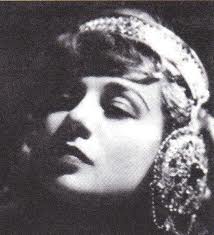
It was not fully a month ago when I heard my first recording of Florence Quartararo. It was Handel's "Care Selve." It was as though someone had touched me with a live electrical wire. It was one of the most thrilling things I have heard in a long time. I was not the only one: that recording, posted on Youtube by "addiobelpassato," set off an instant flurry of activity, and I believe every song she ever recorded (sadly, not many) is now up on Youtube. I had to know more about this lady with the glorious voice. Her story turns out to be a rather sad one, although not tragic.
For this article, I asked the help of Mr. Tim Shu (dantitustimshu), one of the very best musical scholars posting on Youtube. What follows is his capsule summary of her life and (short) career, for which I am most grateful. Tim credits his own source, record producer/archivist Richard Caniell, a friend of Quartararo's, and the man responsible for getting her recordings out to the public. Tim goes on:
[Florence Quartararo] was born to music loving Italian parents living in the San Francisco Bay area. Gaetano Merola, head and chief conductor of the San Francisco Opera, was present at her baptism (Merola was a friend of her mother's brother.) She developed an interest in singing in her childhood, her idol being Claudia Muzio, whom she saw in Traviata at the SF opera. She went to the opera as a standee whenever Muzio sang. She also admired Ponselle, Rethberg, Gigli, Schipa, Bergioli and Martinelli, all of whom also sang in San Francisco. Through friends, she eventually met Bing Crosby, who auditioned her and put her on his Kraft Music Hall program, under the stage name of Florence Alba, where she appeared four times in 1945.
In that same year, she was called upon to replace Helen Traubel in a concert conducted by Otto Klemperer. Earle Lewis, Treasurer of the box office at the Met, happened to be in the audience, and he arranged for her to have an audition with the great conductor Bruno Walter. The session impressed Walter so much that he recommended her to the Met's General Manager Edward Johnson, who saw to it that she received the Caruso Award to fund her studies, as well as a Met contract. She made her Met debut in the role of Micaela in Carmen, in 1946.
She went on to sing 37 performances at the Met in 9 roles—Elvira in Don Giovanni, Violetta, Micaela, the Flower Maiden in Parsifal, Lauretta in Gianni Schicchi, the Countess in Figaro, Nedda in Pagliacci, Pamina in the Magic Flute, and Desdemona in Otello. She sang with great conductors, including Bruno Walter and Fritz Busch, both of whom admired her greatly. Her performance as Desdemona brought her to the attention of Arturo Toscanini, who telephoned her personally and invited her to sing the role in his NBC broadcast of Otello. She auditioned for Toscanini and the maestro was greatly impressed, but the Met was unable to release her from its performance schedule to attend Toscanini's intensive rehearsals.
Her marriage to Italian bass Italo Tajo, whom she met during a performance of Gianni Schicchi, and the birth of a daughter, led to the end of her three year career.
I would only add to Tim's summary that she and Tajo seemed to agree that one opera singer in the family was enough, a personal decision unfortunately common enough in the day, but sad by today's standards, and a great loss to the world of music.
Here is the recording that started the recent flurry, and impressed me so greatly: "Care Selve," from Handel's Atalanta:
I still get chills every time I hear this aria! What a voice! There is an immediacy, a passionate intensity, and a vibrancy in the voice that is just amazing. Her top is wonderful, but there is, in addition, a near mezzo-like, or perhaps more accurately a dramatic Ponselle-like cover and "chest register" richness of tone that just goes through one like an arrow. An absolutely magnificent voice. I realize that arias of this genre—and age—are commonly sung in an ethereal way that comes close to hypnotic crooning, but there is no reason at all to think that they must be sung that way. A great voice is a law unto itself. Even if that were not the case, however, there is no denying her instinctive musicality that takes her directly to the core of the song.
Here is a more nearly modern classic, an aria widely performed and known, and generally well loved, "Un bel dì," from Madama Butterfly [This selection is a radio transcription, of uneven quality, but listenable. You might need to turn the volume up a bit. Also, you will need to click the following link to play it...I cannot embed this particular aria]:
http://www.youtube.com/watch?v=KIvNeCIspqE
Absolutely beautiful! Once again, the emotional intensity, the vibrancy, the sure musical instincts, all take her to the very heart of this tragic aria. This is a piece where the ending must triumph, because it carries the double burden, emotionally, of being a child's hopes for love coupled with an extreme vulnerability; two things that in combination set the stage for a horrible and heart-rending tragedy. Quartararo understands this, and she brings out in no uncertain terms the aria's full power.
Finally, another very famous aria that shows just how great Quartararo's potential for the big Verdi operas was, "Tacea la notte," from Il Trovatore.":
Despite her relative youth, this ranks among the top renditions of this aria! It is all there: the color, the Italianate richness of the voice, the flexibility, and once again the sure musical and stylistic instincts that go to the very core of this Verdi classic. A great singer. Period. Perhaps now, after all these years, at least some recognition will be forthcoming for a wonderful Italian American talent sadly destined to be so briefly before the public.
Sunday, November 21, 2010
Anna Netrebko: Brilliance, Beauty, And Controversy.

I have been a long time coming around to a doing a piece on Anna Netrebko, for one very simple reason: I could not determine exactly what I felt about this very popular soprano. The pluses are obvious—a great voice and extraordinary physical beauty. The cons, if one is inclined to find them, are a carpet-chewing acting impulse and a sometimes woeful lack of discretion in how she permits herself to be presented, presumably by directors and management. What to do!
Anna Yuryevna Netrebko (Анна Юрьевна Нетребко) was born in Russia in 1971. She is a citizen of both Russia and Austria. She says her Austrian citizenship is to facilitate endless visa applications resulting from strictly Russian citizenship, but the move angered many Russians. However, that seems to be abating somewhat following Russia's prominent recognition of her made two years ago, when she was named People's Artist of Russia. No biography is really necessary for so prominent a figure still in her 30's, and everywhere recognized as a star. In addition to People's Artist, she was called "a genuine superstar for the 21st century" by Musical America, and additionally (and here comes part of the problem) she made Playboy's "sexiest babes of classical music" list.
It may seem strange that physical beauty can be a problem, but in the archetype-driven world of grand opera, it can. Hers is a visceral (read sexual) beauty that has an immediate appeal that is worlds apart from the kind of attraction often heaped on divas. There is what might be called a "statuesque regal" beauty, most often found in prima donnas of the past, who project a psychologically complex kind of attraction that really requires a foray into Freudian theory, something I personally am not inclined to do. Suffice it to say that "sexuality" in opera and ballet is not really real, it is usually symbolic and archetypal and has to do with the female in her eternal battle with the feminine—two entirely different things. The point is, it is not realistic sexuality—that is the kind taken over by the cinema, and presented very well there. When cinema invades opera and ballet, however, trouble usually follows in its wake. This is what Sir Kenneth MacMillan discovered when he tried introducing cinematic realism into ballet. He was nearly tarred and feathered and driven out of the ballet world altogether. In the case of opera, European stage directors (and, increasingly, American) are introducing cinematic elements into opera, in an attempt to make a largely 19th century art form "modern," offering new chances for discovery of new elements in old shows. Or so the rationalizing goes. I have some problems with that, but that's too long a story for here. I will only say that a few videos of Netrebko and Alagna, let us say, cavorting in their underwear and pawing each other, is not advised immediately after having eaten, as New York opera goers usually have. BUT—on to some videos, chosen to celebrate, not criticize:
Here is what may qualify as one of the ten most beautiful arias ever written, Dvorak's almost painfully lovely "Song to The Moon," one of Netrebko's signature pieces:
http://www.youtube.com/watch?v=MwuNqcKUxto
What can one say? An exceptionally beautiful aria, sung by an equally beautiful young woman. I do not think this can be faulted in any way. The richness of her voice can be almost mezzo-like in certain places, and it adds a thrilling depth to the sound which is most attractive. The vocal production is flawless; smooth and consistent all the way to the top. Not a bit of harshness or strain anywhere. It really seems to be beneficial for a singer to have been born in either an Italian or Russian speaking culture. Something about speaking either of those languages seems to predispose the musculature of the throat and larynx for classical singing.
Here is a traditional soprano showpiece aria that has for a very long time been a favorite with audiences and sopranos alike, the great "Casta Diva":
http://www.youtube.com/watch?v=yGps1rIvnp4
As in the case of the Dvorak, the singing is impeccable, and she demonstrates here that she can project a traditional elegance and near heroic sensibility, as well as visceral emotion. There is no question that she can communicate directly with an audience, in one way or another.
Now to the controversy. I have no wish to present the most problematical of her videos, which are only too easily found, (the discretion problem) but rather one that is entirely legitimate, in the eyes of most, and that is Netrebko in a modern setting of Traviata. I invite the reader to form his or her own opinion:
Here, the problem (if you consider it a problem) is, again, the superimposition of cinema on a 19th century work of art. Is it legitimate? Is it helpful to opera? Can it be aesthetically justified? I don't know. I notice certain things—one is that the video we have just seen has over half a million hits. Is this significant? You can see the problem...It is just damned hard to judge! My opinion, for what it is worth, is that there are serious problems here. Not with Netrebko—she's stunningly beautiful, she sings exceptionally well, and is passionate in a realistic, cinematic way....no, it isn't her, it's the stage director's concept. I find it flawed from an aesthetic point of view. La Traviata is most definitely not 20th century theater, let alone 21st century. I have the same problem here that I have with opera in translation. In the same way it is difficult to force the musical syntax of a Latin language to conform to the blocky syntax of English or German, it is hard to force cinematic conventions onto the lyric stage. It just doesn't work.
But that is not Netrebko's fault. So, where did I finally come down on the issue of Netrebko? She is a great soprano, with an exceptionally beautiful voice. She also has great beauty which she is, I believe, starting to project in more traditional ways as she grows older and more experienced.
Sunday, November 7, 2010
Leontyne Price: An Aida For All Time


Leontyne Price was born in 1927, in Laurel, Misissippi. She came of age, and rose to fame, during a period of racial change in America, and she broke barriers that had long existed, becoming the first African American to sing leading roles at the Metropolitan Opera, and among the first to sing such roles at the great opera houses of the world, including La Scala.
Like many before her, she showed musical promise as a child. She studied piano and also sang in choirs. It was her voice, of course, that first attracted attention. Her goals at the beginning were modest, and she first aimed at a teaching career, attending Wilberforce College in Ohio. Her first stage performance was as Mistress Ford in a 1952 student production of Verdi's Falstaff. From there on, her career begins to follow a fairly recognizable path. She moved, in reasonably short order, to Four Saints in Three Acts, Porgy and Bess, and then, unusually for the times, a TV production of Tosca. That marked the real beginning of an opera career. Her splendid vocal gifts attracted the attention of important musicians and impresarios, and success upon success soon followed: Poulenc's Dialogues des Carmélites, in San Francisco, followed immediately by Aida, (an opera with which she would always be associated), Don Giovanni, and Il trovatore. It was as a heroic romantic lead in Verdi and Puccini roles that she would particularly come to be identified, and she did indeed excel in such roles.
Perhaps the first great moment for her in America came in 1961, in a famous production of Aida at the Metropolitan in which Price appeared opposite the great Franco Corelli. Her success was so astonishing that her final curtain call is reliably reported to have lasted over half an hour! From there on, her success is a well known story, easily consulted. Hers was, simply, one of the great careers in opera, and her voice, at its best, was a thrilling instrument of extraordinary power and beauty that one critic once said stirred feelings similar to those that can be occasioned by watching a waving flag.
Why not start with the aria with which she was most closely identified. It tells the story very well:
A simply stunning rendition! Perhaps it is the quality of the voice per se that most attracts. She sings within a very wide vocal range; like Corelli, the spinto qualities are evident, but the extra weight does not detract from the upper register. She could, and often did, sing beyond C natural. It was this particular aria, however, with which nearly everyone, critics and public alike, were riveted from the very beginning. Its particular tessitura lies squarely within the very best area of her voice, with all its thrilling resonances.
It was in the same year as her spectacular Aida debut, with Corelli, that she made another historic debut, this time in Il Trovatore, also with Corelli. This is an actual transcription of that event, and the audience, at the end, seems close to hysteria. So much so, in fact, that Corelli is reputed to have politely suggested to Rudolf Bing that he would appreciate not being cast with Price henceforth! He is said to have repented, however, but one can understand his nervousness—Aida and Trovatore are also big operas for the tenor!
Anything I could add to the invariable accolades heaped upon this performance would be somewhere between superfluous and just plain silly. In fact, it is brilliant in all ways, with perhaps one little exception that perhaps I may make bold to point out, and that is something for which she was taken to task by Von Karajan and others, and that her notorious tendency to "slide and glide." The portamenti up and down really stand out and are not, perhaps, in the truest vocal or dramatic traditions of these operas. But....good heavens, who cares!?
Finally, some attention needs to be paid to Porgy and Bess. She did not shun these roles—quite the contrary. She could easily have gone to Italy to live (she loved Italy) and played the real-life role of the great prima donna, but she was very grounded in her essential American character. (She disliked the term "African-American," incidentally; she to this day considers herself "American"—period.) Here is the big aria from Porgy. [This video is old, and not in very good shape, but hearing Price during this period of her life is illustrative]
Now here it has to be said that the portamenti up and down work just fine! This is the kind of opera where "gospel" singing characteristics work perfectly well.
A great singer, a great voice, a great lady; by virtually any set of criteria one of the great opera singers of the 20th century.
Subscribe to:
Posts (Atom)